
What Is the Battery Passport? The First EU DPP

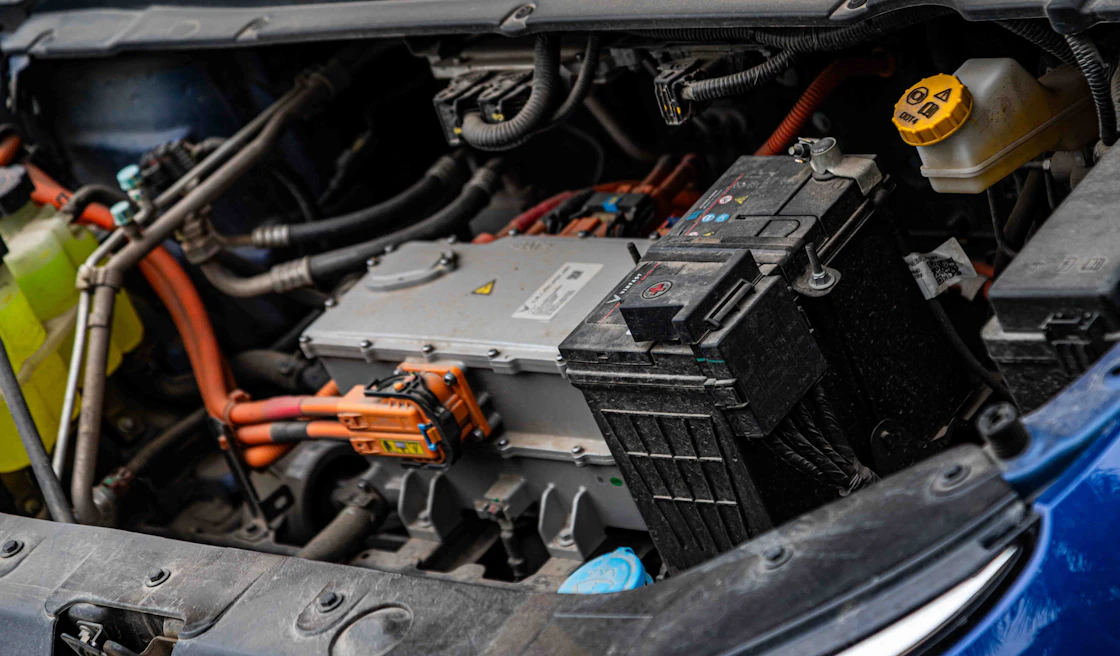
A battery passport is a QR code on the battery itself, and behind it a record the law now requires. There is nothing to post or email. No passport, no sale.
The battery passport is the first time a Digital Product Passport stops being a policy idea and becomes a hard requirement on a physical product.
At a glance:
- The battery passport is an electronic record for one individual battery, required under the EU Batteries Regulation, Regulation (EU) 2023/1542.
- It is the first Digital Product Passport to become mandatory in the EU.
- It becomes mandatory on 18 February 2027. After that, no passport means no EU sale.
- It covers EV batteries, LMT batteries, and industrial batteries above 2 kWh. Portable batteries are out of scope.
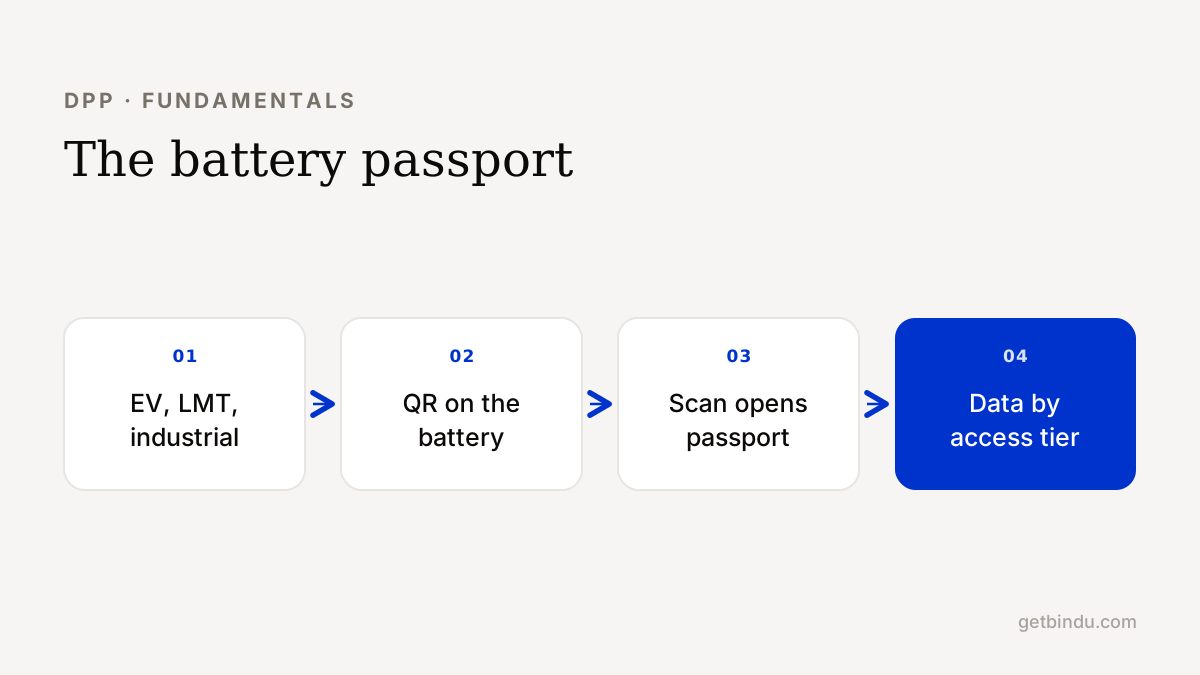
- Each unit carries a QR code that opens its own passport, with data shown by access tier.
What is the battery passport?
The battery passport is an electronic record for one individual battery, built from the fields in Annex XIII. It is the first Digital Product Passport (DPP) to become mandatory in the EU. It is required under the EU Batteries Regulation, Regulation (EU) 2023/1542.
A Digital Product Passport (DPP) is a structured electronic record that carries a product's sustainability and compliance data, reached through a data carrier such as a QR code. The battery passport is the first one the EU has made compulsory on a physical product.
Every covered battery carries a QR code. Scanning it opens the passport for that one unit. It is not a datasheet for the model. It is a record for the single battery in your hand.
There is one passport per battery placed on the market. The record has to stay accurate for the life of the product. Data that goes stale is a compliance gap, not a minor slip.
Which batteries need a passport?
The passport targets the large batteries. Three categories are in scope, and capacity only matters for one of them. LMT means light means of transport, the class that covers vehicles such as e-bikes and e-scooters.
| Battery category | Example uses | Capacity threshold | Passport required |
|---|---|---|---|
| Electric-vehicle (EV) | Cars, vans, buses | None | Yes, every unit |
| LMT (light means of transport) | E-bikes, e-scooters | None | Yes, every unit |
| Industrial | Stationary storage, backup power | Above 2 kWh | Yes, when above 2 kWh |
| Portable | Phones, laptops, power tools | Not applicable | No |
The 2 kWh threshold applies to industrial batteries only. An industrial battery of 2 kWh or less falls outside the passport rule. EV and LMT batteries carry no such threshold, so every one of them needs a passport.
Portable batteries are out of scope for the passport. Those are the batteries in phones, laptops and power tools. Other parts of the Batteries Regulation still apply to them. They just do not need a passport.
A worked example
Picture a factory outside the EU. It builds 500 industrial batteries, each rated at 5 kWh. An EU importer buys the batch and places it on the German market.
Each battery is above 2 kWh, so each one needs a passport. That is 500 passports, not one. The QR code on each unit resolves to its own record.
The importer, not the foreign factory, is the economic operator here. The importer places the batteries on the EU market. So the importer owns all 500 passports and keeps their data current.
Now change the rating to 2 kWh. At 2 kWh the batteries are not above the threshold. They fall outside the passport rule, though other battery rules still apply.
When does it start?
The passport becomes mandatory on 18 February 2027. From that date, a covered battery cannot be placed on the EU market without one.
This date sits inside the wider EU Batteries Regulation timeline. The regulation has applied since 2024. Labelling rules land in 2026. The QR-linked passport follows in 2027.
The order matters for planning. Much of the passport data comes from suppliers, and collecting it takes time. So the work starts well before the 2027 date, not on it.
What is behind the QR code?
A scan does not show everyone the same thing. Annex XIII splits the record into four blocks, and who is scanning decides which ones open.
| Annex XIII point | Who can see it | Level |
|---|---|---|
| 1. Public | Anyone who scans the QR code | The battery model |
| 2. Legitimate interest and the Commission | Recyclers, repairers and others with a defined need | The battery model |
| 3. Notified bodies, market authorities and the Commission | Regulators and conformity bodies | The battery model |
| 4. Legitimate interest only | Recyclers, repairers and others with a defined need | The individual battery |
Only the fourth block is about the unit rather than the design, and it is the one the Commission has no access to. Inside your own tier the passport is free of charge under Article 78.
What the record must contain is set out in Annex XIII. That runs from the carbon footprint to due-diligence data. We break it down in what a battery passport must hold.
What happens if the passport is missing or wrong
The regulation sets no EU-wide fine. Article 93 leaves penalties to each member state and asks only that they be "effective, proportionate and dissuasive", with those national rules due by 18 August 2025. So the size of the exposure depends on where the battery lands.
The commercial risk is more predictable than the legal one. A battery in scope has to have a passport to be placed on the market, so a missing or stale record stops the sale before any authority gets involved.
Who is responsible?
The economic operator is the party that places the battery on the EU market. That is the manufacturer or the importer. One party carries the duty.
They own the passport. They must keep its data accurate and current. There is one responsible operator per battery, so the duty cannot be quietly shared away.
This is why the importer matters so much. When the maker sits outside the EU, the importer becomes the operator on the hook. The passport travels with the battery, but the duty stays with whoever puts it on the market.
Where Bindu fits. One passport per unit means the record count scales with how many batteries you ship, not with how many models you sell. Bindu holds the template per model, fills it per unit, and publishes the page each QR code resolves to, with the access tiers applied. See the battery passport breakdown.
FAQ
What is the battery passport? The battery passport is an electronic record for an individual battery, the first Digital Product Passport to become mandatory in the EU. It is required under the EU Batteries Regulation and is accessed through a QR code on each battery.
Source: EUR-Lex: EU Batteries Regulation (EU) 2023/1542, Article 77
When is the battery passport mandatory? From 18 February 2027. From that date, a covered battery cannot be placed on the EU market without a passport.
Source: EUR-Lex: EU Batteries Regulation (EU) 2023/1542, Article 77
Which batteries need a passport? Electric-vehicle batteries, LMT (light means of transport) batteries, and industrial batteries above 2 kWh. One passport per individual battery. Portable batteries are outside the passport requirement.
Source: EUR-Lex: EU Batteries Regulation (EU) 2023/1542, Article 77
Is the battery passport a Digital Product Passport? Yes. It is the first Digital Product Passport to take effect. Other categories, textiles among the first, follow later under the Ecodesign for Sustainable Products Regulation (ESPR).
Source: EUR-Lex: Ecodesign for Sustainable Products Regulation (EU) 2024/1781
Who is responsible for the battery passport? The economic operator that places the battery on the EU market, the manufacturer or the importer. They own the passport and must keep its data accurate, complete and up to date.
Source: European Commission: Batteries