
Textile DPP Timeline: When the Passport Applies

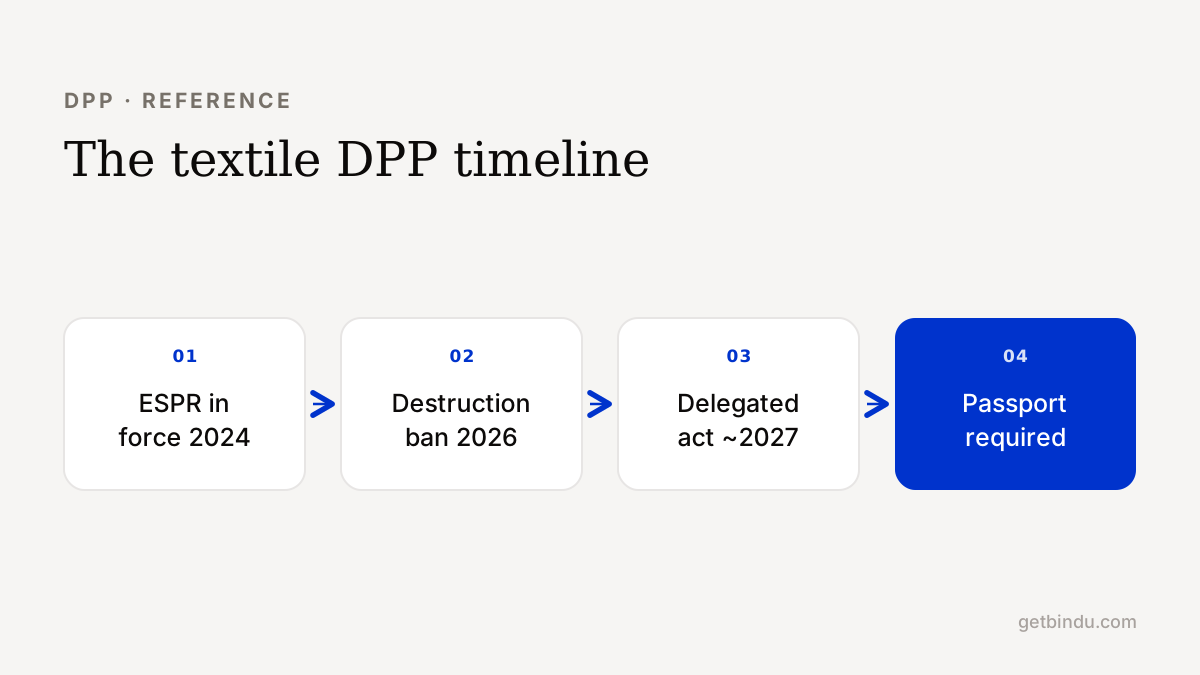
The textile digital product passport is a digital record of what a garment is made of, where its materials came from, and how durable it is. It is not mandatory yet. It is created by the Ecodesign for Sustainable Products Regulation (ESPR, Regulation (EU) 2024/1781), which is already in force. But the passport becomes compulsory for textiles only once the Commission adopts a delegated act for textiles, expected around 2027. One textile obligation is already dated, though. From 19 July 2026, large companies may not destroy unsold clothing. For what the passport is and what it has to hold, start with the digital product passport for textiles explainer.
At a glance:
- The textile digital product passport is not mandatory yet. It waits on a textile delegated act, expected around 2027.
- It is created by the ESPR, Regulation (EU) 2024/1781, in force since 18 July 2024.
- The first dated textile obligation is the unsold-stock destruction ban from 19 July 2026.
- That ban lands on large companies first, on medium-sized firms from 19 July 2030, and never on micro and small firms.
- After the delegated act, a transition period runs before the passport is required on products.
The textile DPP arrives in stages, and a lot of what circulates online treats a proposed date as a settled one.
Why the textile DPP has no single start date
The ESPR is a framework law. It sets up the digital product passport and the ecodesign rules. Then it hands the detail for each product group to a separate delegated act. Textiles get their own.
Delegated acts are the secondary rules the Commission adopts to fill in what a framework law leaves open. Until the textile one is adopted, three things stay unfixed. These are the exact data fields, the scope, and the date the passport becomes mandatory.
This is why an honest timeline splits in two. It gives firm dates for what is settled. It gives a careful "expected" for what still depends on the delegated act.
So the thing you can plan around today is the unsold-stock destruction ban. It is already law, with a real date. The passport is not.
The textile DPP timeline, date by date
The sequence runs from the framework law to the passport itself.
| Date | What happens | Status |
|---|---|---|
| 18 July 2024 | ESPR entered into force, replacing the 2009 Ecodesign Directive and setting up the DPP framework | Settled |
| April 2025 | The ESPR 2025 to 2030 working plan names apparel and clothing accessories a priority group | Settled |
| 19 July 2026 | The ban on destroying unsold textiles starts to apply to large companies | Settled |
| Around 2027 | The textile delegated act is expected, defining the passport data set and its mandatory date | Expected |
| After the act | At least 18 months before the requirements apply, then the passport is required on products | Floor set by Article 4(4) |
Only the first three rows are safe to plan against. The 2027 date is indicative. The gap after it has a floor, though: Article 4(4) of the ESPR says a delegated act cannot apply earlier than 18 months from its entry into force, except in duly justified cases or where it only amends an existing act. So a 2027 act points at 2029 at the earliest, and that is the number to plan against until the act itself is published.
The dated obligation most brands miss
While the passport is still being drafted, the destruction ban is already counting down.
From 19 July 2026, large companies may no longer destroy unsold clothing, clothing accessories, and footwear. The rule does not land on every company at once. It phases in by company size.
Scope is narrower than it sounds. Annex VII lists two groups by commodity code: apparel and clothing accessories under CN 4203, 61, 62, 6504 and 6505, and footwear under CN 6401 to 6405. Nothing else is in yet, though the Commission can add product groups later.
| Company size | Unsold-stock destruction ban |
|---|---|
| Large companies | Applies from 19 July 2026 |
| Medium-sized companies | Applies from 19 July 2030 |
| Micro and small enterprises | Exempt |
Consider a jacket brand sitting on a pallet of unsold winter coats. If it counts as a large company, 19 July 2026 is a hard line. After that date, sending those coats to landfill or incineration is off the table. If it is a medium-sized firm, the same rule bites on 19 July 2030, four years later. If it is a micro or small enterprise, the destruction ban does not apply to it at all.
The destruction ban bites before the passport does, and it is easy to miss while everyone watches 2027. For a large company holding unsold stock, 19 July 2026 is the date on the calendar.
What to do before the delegated act lands
You cannot file a textile passport today. The fields are not final. But the work that makes the passport achievable is work you can start now. For every style, know what it is made of, where the materials came from, and what evidence stands behind each claim, such as a supplier declaration or a lab report.
The payoff is time. A brand that already holds clean fibre composition, material origin and durability data has far less to chase once the format is set. A brand that does not will spend that time chasing suppliers.
There are two deadlines on one calendar. The destruction ban is dated 19 July 2026. The passport waits on the delegated act, and one does not wait for the other.
For what the passport is and how it works, start with what a textile digital product passport is. For the field-level data it will demand, see what a textile passport must hold. Packaging runs to its own calendar in the PPWR timeline.
Where Bindu fits. Bindu reads supplier documents into product records now, so the fibre and origin data is ready before the delegated act fixes the format. See the textile passport breakdown.

FAQ
When does the textile digital product passport become mandatory? Not yet. The ESPR that creates it is in force, but the passport becomes compulsory for textiles only once the Commission adopts the textile delegated act, expected around 2027, followed by a transition period. The exact date is set by that act.
Source: EUR-Lex: Ecodesign for Sustainable Products Regulation (EU) 2024/1781
Source: European Commission: Digital product passport for textile apparel
What is the 19 July 2026 textile deadline? From 19 July 2026, large companies may no longer destroy unsold clothing, clothing accessories, and footwear under the ESPR. It is the first dated textile obligation. Medium-sized companies follow on 19 July 2030, and micro and small enterprises are exempt.
Source: EUR-Lex: Ecodesign for Sustainable Products Regulation (EU) 2024/1781
Has the textile DPP been delayed? There was never a single fixed start date to delay. The passport depends on a delegated act the Commission has not yet adopted, so its mandatory date is still open, indicatively around 2027.
Source: EUR-Lex: Ecodesign for Sustainable Products Regulation (EU) 2024/1781
Which regulation sets the textile DPP timeline? The Ecodesign for Sustainable Products Regulation (ESPR), Regulation (EU) 2024/1781, which entered into force on 18 July 2024 and defers the product-specific detail for textiles to a separate delegated act.
Source: EUR-Lex: Ecodesign for Sustainable Products Regulation (EU) 2024/1781
What can textile brands do before the delegated act is adopted? Gather and keep clean product data now: fibre composition, material origins, durability and recycled content, with evidence behind each claim. When the format is fixed, a brand that already holds that data can publish its passports quickly.
Source: EUR-Lex: Ecodesign for Sustainable Products Regulation (EU) 2024/1781