
EUDR for Coffee Exporters: What Buyers Ask For

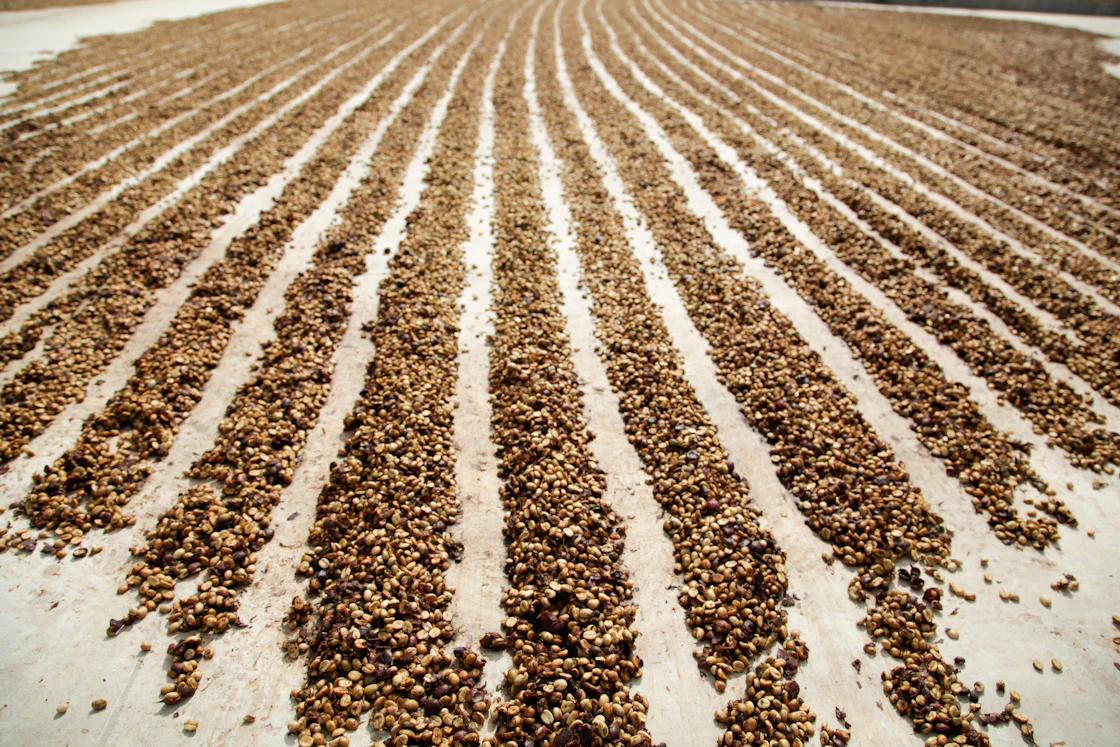
The email arrives on a Tuesday. Subject line: "EUDR data request." Your buyer in Hamburg, the one who has taken your coffee for nine years, is asking for something new. Plot coordinates. Legality documents. Harvest records. And a line near the bottom that stops you cold: "We need you EUDR-ready by the next shipment, or we will have to source elsewhere."
Not a rejected shipment. Not a fine. The account. Gone.
This is the year the request stops being polite. An EUDR compliant coffee exporter hands the buyer a data package the law demands, in a form they can actually file.
At a glance:
- EUDR is Regulation (EU) 2023/1115, the EU Deforestation Regulation. It keeps deforestation-linked coffee off the EU market.
- Your EU buyer is the operator who files the Due Diligence Statement (DDS). You supply the data.
- Large and medium operators must comply by 30 December 2026. Micro and small operators follow on 30 June 2027.
- Every plot needs geolocation under Article 9: a single point under 4 hectares, a polygon at 4 hectares or more.
- Nothing you send can point to land cleared after 31 December 2020. Coffee sits under CN heading 0901, in scope.
Why your buyer suddenly needs your data
The reason is a shift in who is legally on the hook. The rule is Regulation (EU) 2023/1115, the EUDR. An operator is the party that first places coffee on the EU market, and only the operator (or a solo operator) files the Due Diligence Statement, the DDS. Your buyer is that operator. Traders and downstream roasters reuse and pass on the operator's DDS reference number. Producers are the farms and co-operatives that supply the data; they do not file.
So the burden sits with your buyer. But they cannot file a thing without you. The DDS is the operator's declaration that the risk of non-compliance is negligible, and it must reference the geolocation of every plot the coffee came from. No plots, no DDS. No DDS, no coffee on the EU market. That is why the email landed on your desk. Your buyer is not being difficult. They are trapped, and the key is in your filing cabinet.
For the rule your buyer is answering to, see what EUDR is. For the filing itself, see what is an EUDR DDS; for the buyer's side of this handshake, see EUDR for coffee importers.
Exactly what the buyer will ask for
Read the request again and it resolves into four things.
| What the buyer asks for | What it is | The rule |
|---|---|---|
| Plot geolocation | GPS location of every plot the coffee came from | Article 9: a point under 4 hectares, a polygon at 4 hectares or more |
| Legality proof | Documents showing the coffee was produced lawfully | Article 2(40): eight areas, from land rights to tax and trade |
| Harvest and traceability | Which plots fed which lot, harvest and bag | An unbroken chain from tree to container |
| Cutoff status | Proof the land was not cleared after the cutoff | 31 December 2020, whatever local law allowed |
Plot geolocation, per Article 9. Every plot your coffee came from, no sampling, no averages. Under 4 hectares, a single point: latitude and longitude to six decimal places. At 4 hectares or more, a polygon tracing the real boundary of the plot. This is the spine of the whole file. Coffee sits under CN heading 0901, squarely in scope.
Legality proof across the eight areas of Article 2(40). Land rights, environment, forest rules, third-party rights, labour, human rights, free prior and informed consent, and tax and trade. Your buyer must show the coffee was produced in line with the laws of the country of origin. Where you hold the document, a land title, a registry entry, a permit, attach it.
Harvest records and traceability. Which plots fed which lot, which harvest, which bag. The chain from tree to container has to hold without a gap.
Under all of it sits the cutoff: 31 December 2020. Coffee grown on land cleared after that date is non-compliant whether or not the clearing was legal locally, and that status does not reset when the land changes hands. This is what "eudr ready coffee" actually means. Not a certificate. A verifiable line back to land that was already coffee, or already cleared, before the cutoff.
A worked example: what you send for 200 plots
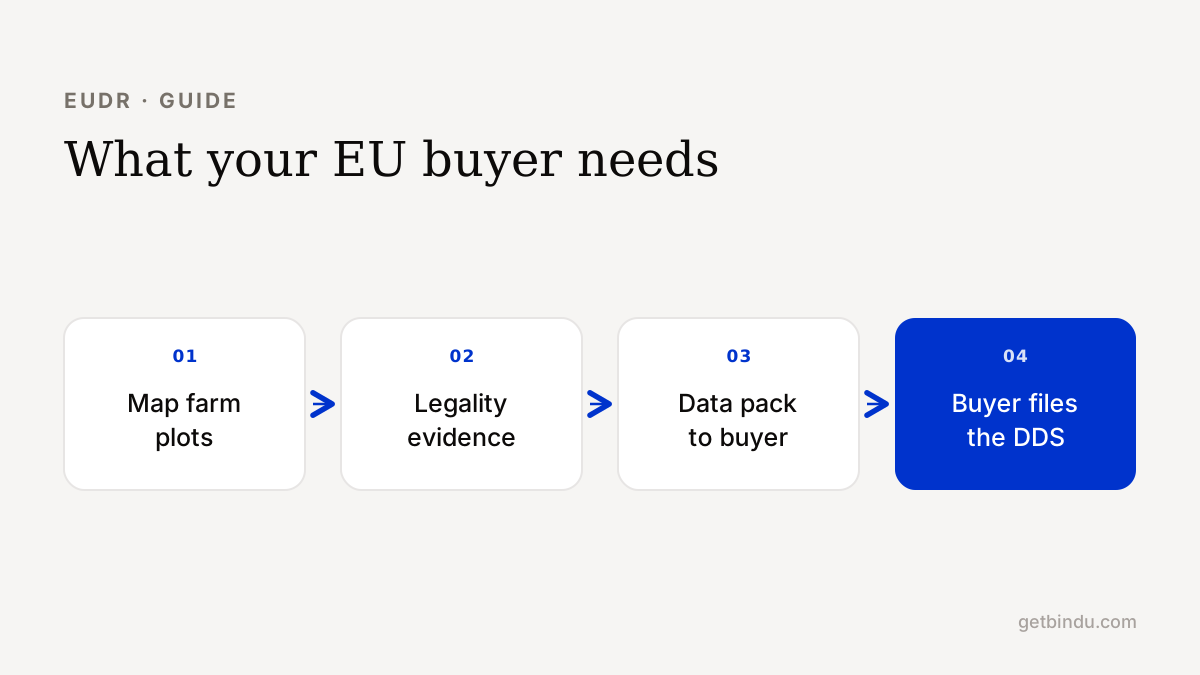
Consider a co-operative that gathers coffee from 200 smallholder plots. What the buyer needs back is one package, and it has four parts.
Geolocation comes first. Most of the 200 plots are under 4 hectares, so each is a single GPS point, latitude and longitude to six decimal places. The handful at 4 hectares or more need a polygon tracing the real boundary. That is 200 rows, mapped once and reused every season.
Second is the deforestation check: each plot against the 31 December 2020 cutoff, with the result and the date it was run.
Third is legality. A land title or a registry entry for each sourcing area, covering the eight areas of Article 2(40).
Fourth is the exclusion list, and it is the part exporters leave out. Say one plot cannot be mapped or proven. It is kept out of the lot, because one unverified bag would contaminate the whole container. Your buyer wants to see that you made that call deliberately, plot by plot, rather than hope nobody checks.
With those four parts in hand the buyer references your plots in a single DDS.
The clock, and why it is already ticking
The date that governs the email is 30 December 2026, the application date for large and medium operators. That is your buyer. Micro and small operators follow on 30 June 2027. The regulation was postponed twice and simplified once, so ignore any 2024 or early-2025 deadline you may have seen. December 2026 is close enough that buyers are qualifying their supply base now, this season.
The one bag that fails the whole container
There is a quieter risk in the buyer's mind, and it is why they want your lots clean and separated. Under the regulation, mixing is fatal: verified and unverified coffee cannot travel in the same container. A buyer will not accept a shipment where your EUDR-ready lots are blended with anything unmapped or unproven. They favour the exporter who can prove, lot by lot, that nothing unverified slipped in. That is how you stop being the risky supplier and start being the easy one.
Where Bindu fits. Hand over every coordinate and every document, and you have handed a nine-year buyer the map to your supply base. Bindu is built so you do not have to make that trade. Your plots, satellite checks and documents stay in your own workspace, and you grant the buyer standing access to a data package, never a copy. See how it works.
FAQ
What does it mean to be an EUDR compliant coffee exporter? It means you can supply three things for every plot. First, the geolocation required by Article 9: a point under 4 hectares, a polygon at 4 hectares or more. Second, proof of legality across the eight areas of Article 2(40). Third, traceability from harvest to lot. All of it must point back to land not cleared after 31 December 2020. Your EU buyer needs this to file their DDS.
Source: EUR-Lex: EUDR, Regulation (EU) 2023/1115 (consolidated)
Do I file the DDS as an exporter? No. Only the operator, the party first placing the coffee on the EU market, files the DDS, usually your EU buyer. Producers supply the data; traders and downstream roasters reuse the operator's reference number. The Commission's guidance notice works through who counts as the operator in a chain like yours. See what is an EUDR DDS and the EUDR DDS reference number.
Source: EUR-Lex: EUDR, Regulation (EU) 2023/1115 (consolidated)
Source: European Commission: Guidance document for Regulation (EU) 2023/1115
When do I need to be ready by? The application date for large and medium operators, your buyers, is 30 December 2026. Micro and small operators follow on 30 June 2027. Buyers are qualifying suppliers now, so in practice the deadline is this season.
Source: EUR-Lex: Regulation (EU) 2025/2650 (second postponement)
Can I prove compliance without handing over my farm coordinates? Yes. With Bindu your plots stay in your own workspace and you grant the buyer standing access to a data package rather than a copy, or send a ZIP evidence pack. You keep control of the underlying farm data. For background on the commodity, see what is EUDR coffee.
Source: EUR-Lex: EUDR, Regulation (EU) 2023/1115 (consolidated)
Answer the email
That message from Hamburg does not have to be the start of losing the account. It can be the moment you become the supplier they cannot replace. Map your plots once, check them, package your legality, and grant your buyer standing access, all without giving your farms away. Reply to that email with a clean, EUDR-ready data package instead of an apology. Book a demo and be ready before the next shipment sails.